Iran: A civilization that refuses to bow
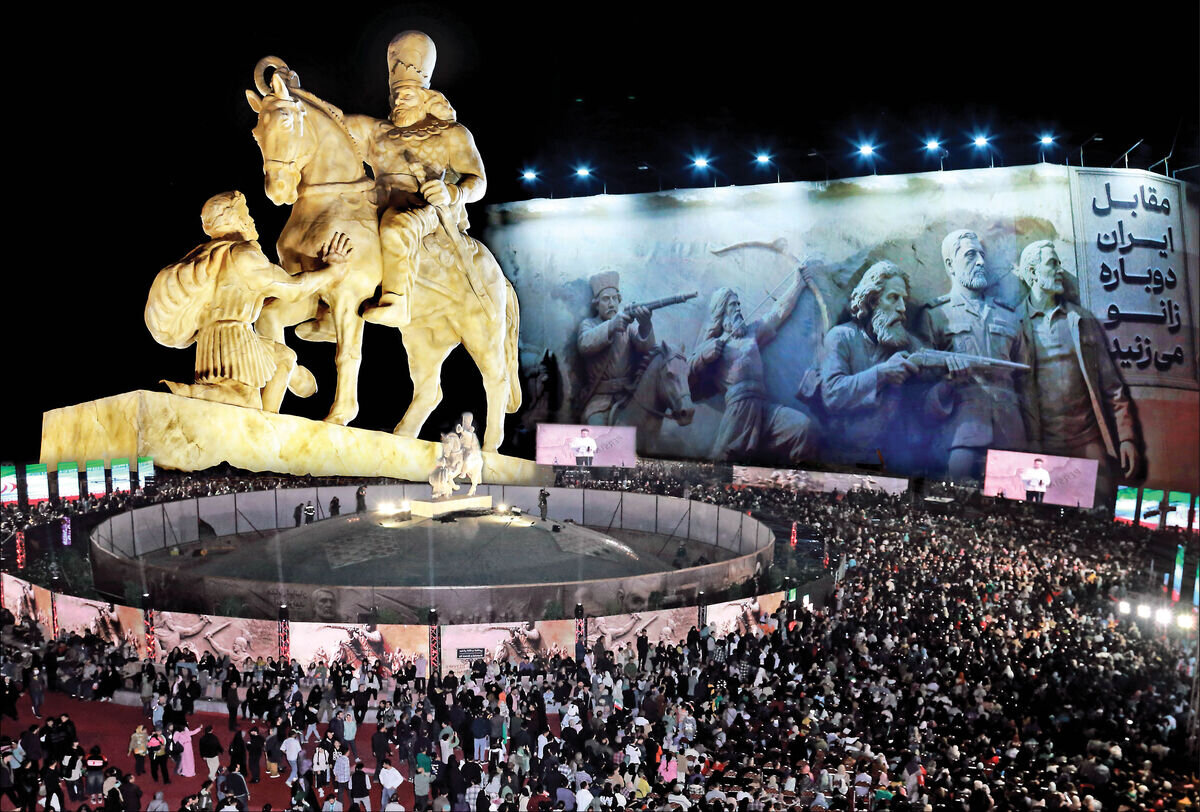
HAFIZABAD, Pakistan – Iran is often discussed through the language of sanctions, nuclear negotiations, and regional tensions. Yet those headlines tell only a small part of the story. Behind the politics stands a civilization that has survived for thousands of years and has repeatedly outlived the forces that sought to dominate it.
Few countries carry a historical memory as deep as Iran's. Long before the modern world took shape, Persia was already one of the great centers of human civilization. Under Cyrus the Great, the Persian Empire stretched across vast territories and governed diverse peoples. Historians still debate many aspects of that era, but there is little disagreement about its importance.
What followed was not a history of uninterrupted glory.
The Persian Empire fell to Alexander the Great. Centuries later, Mongol armies swept across the region, leaving destruction that changed the course of Iranian history. Cities were burned, libraries vanished, and countless lives were lost. Looking back, it would have been reasonable to assume that such blows might permanently break a civilization.
They did not.
Iran's history is marked by a remarkable ability to absorb shocks and reinvent itself. Dynasties rose and fell. Foreign powers arrived with armies, trade agreements, and political ambitions. Borders shifted. Governments changed. Yet something deeper endured.
That resilience was tested again in the modern era. The 1953 overthrow of Prime Minister Mohammad Mossadegh became a defining event in Iran's political consciousness and strengthened suspicions of foreign interference that continue to influence public debate today.
The 1979 Revolution then transformed the country's political order and altered its relationship with much of the world. Almost immediately afterward came the Iran-Iraq War, a conflict that lasted eight years and left scars that are still visible. Hundreds of thousands were killed or wounded. Families lost fathers, sons, and brothers. Entire communities carried the weight of that sacrifice.
For many nations, such experiences become turning points from which recovery is slow and uncertain.
Iran recovered.
That does not mean the country emerged without problems. Modern Iran faces harsh economic sanctions and Western-led pressure in various forms. But history suggests that reducing Iran to today's disputes misses the larger picture.
The country has spent much of its existence confronting challenges larger and stronger than itself. Some arrived on horseback, some arrived in military uniforms, and others arrived through international politics. Each era brought predictions of decline. Yet Iran remained.
Perhaps that is what makes its history worth studying.
Civilizations are often remembered for the power they once possessed. Iran's story is equally about endurance. It is about a society that continued after empires collapsed, after wars ended, and after generations were forced to rebuild from loss.
The lesson is not that Iran was never defeated. History clearly shows otherwise.
The lesson is that defeat was never the end of the story.
Again and again, Iranians buried their dead, rebuilt their cities, preserved their culture, and moved forward. That persistence helps explain why a civilization born thousands of years ago remains a living presence in the modern world.
Today, Iran is standing and fighting. Salute to its people who are not afraid of any kind of threat in order to protect their civilization. Trump is psychologically unstable and is himself worried about how he can protect himself from Iranians now. If Trump had studied history, he would have thought twice before approaching a civilization whose crown jewel is education. But history repeats itself. Today Iran still stands strong, neither bowed nor exhausted.
Many powerful empires survive only in museums and history books. Iran is still here.
Empires that once seemed unstoppable have vanished into history. Their monuments remain, but their civilizations are gone. Iran remains alive, still arguing, adapting, creating, and shaping its future. For thousands of years, Iranians have shown that survival is not simply about strength, but about endurance, memory, and the determination to stand again after every fall.
Across millennia, one truth keeps rising from its past: civilizations do not endure by avoiding destruction. They endure by refusing to be defined by it. Iran is one of those rare civilizations that bends under pressure yet never breaks into silence. A civilization forged by fire, tested by invasion, and still refusing to bow.
That is why Iran’s story continues. Not because it was never defeated, but because, despite everything it has endured.
The ultimate lesson of Iran is this: a civilization willing to sacrifice everything for its independence may bend under pressure, but it will never be erased, and it will never bow.
Leave a Comment